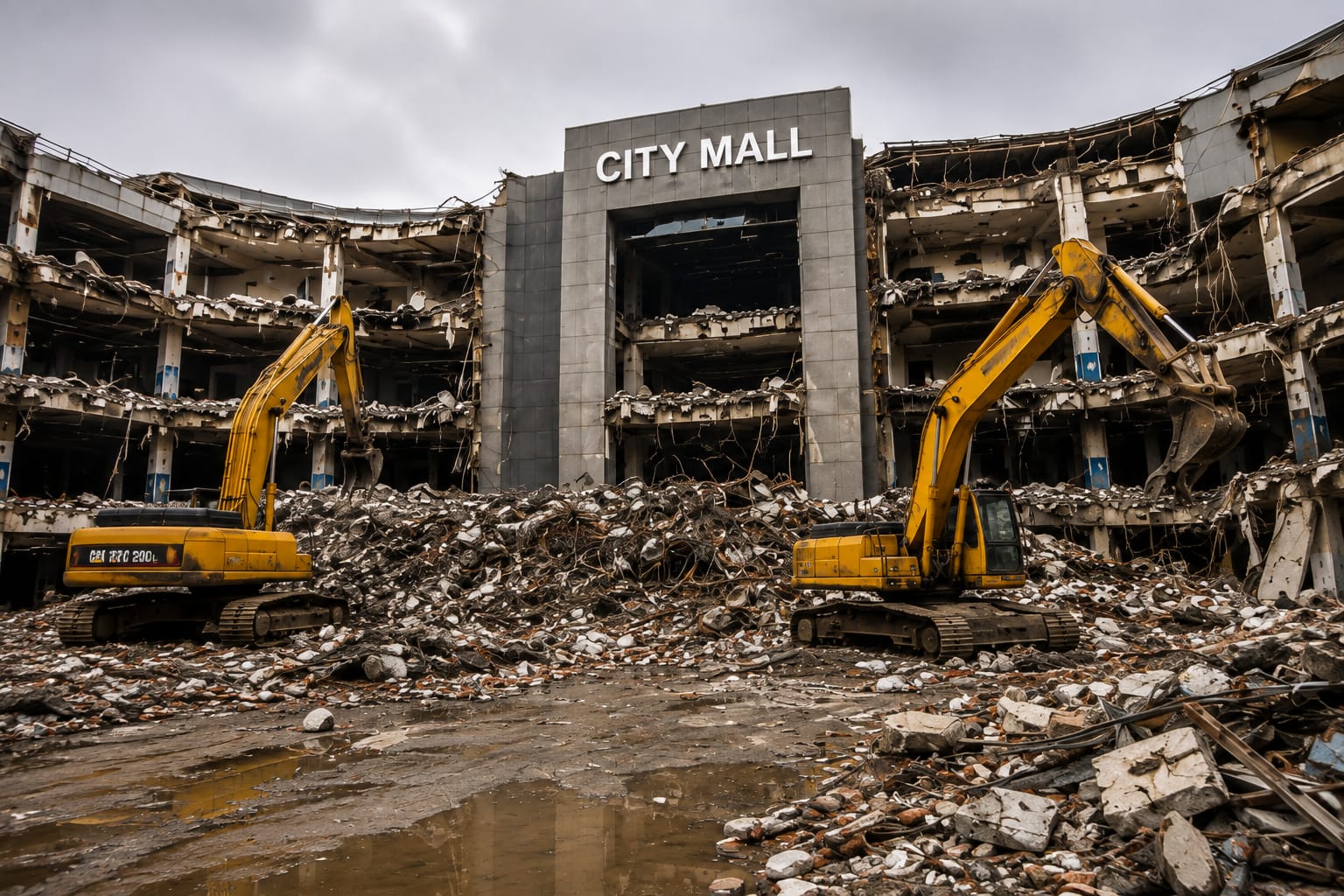
Professional, Safe & Controlled Mall Demolition Services
Demolishing a shopping mall is a complex demolition and dismantling operation that requires detailed planning, structural assessment, specialized machinery, experienced manpower, and strict safety controls. Unlike a small building, a mall may contain multiple floors, large RCC structures, steel frameworks, escalators, elevators, HVAC systems, electrical installations, glass façades, parking areas, service corridors, and other interconnected systems.
Malik Trading and Demolition provides professional Malls Demolition and Mall Dismantling Services for old, vacant, damaged, redeveloped, or structurally obsolete commercial properties. Our approach focuses on controlled execution, structural stability, worker safety, material recovery, debris management, and efficient site clearance.
India’s IS 4130:2024 – Demolition of Buildings — Code of Safety covers safe demolition and dismantling of different types of buildings and emphasizes planning, competent personnel, controlled work areas, and appropriate demolition procedures.
What Is Mall Demolition?
Mall demolition involves the planned dismantling or removal of an existing shopping mall or selected portions of a mall structure. Depending on the site condition and redevelopment requirements, the work may involve:
- Complete mall demolition
- Partial mall demolition
- RCC structural demolition
- Commercial building demolition
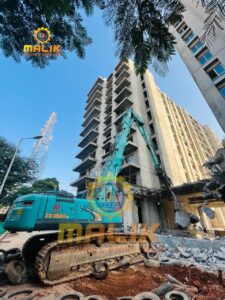
- High-rise mall demolition
- Interior dismantling
- Steel structure dismantling
- Parking structure demolition
- Escalator and elevator dismantling
- Façade and glass removal
- Concrete breaking and cutting
- Equipment and MEP dismantling
- Scrap segregation and recovery
- Debris removal and site clearance
The demolition method is selected according to the structure, surrounding buildings, accessibility, site constraints, structural condition, and project requirements.
Mall Demolition Services by Malik Trading and Demolition
1. Complete Mall Demolition
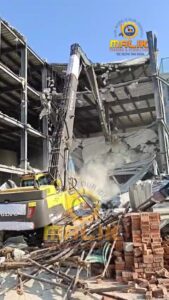
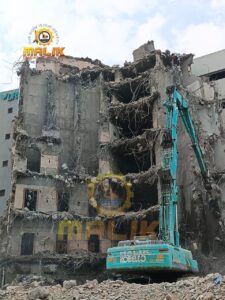
We undertake complete demolition of shopping malls and large commercial structures using planned and controlled demolition techniques. The work is organized in stages to maintain stability and minimize unnecessary impact on surrounding areas.
2. Partial Mall Demolition
When only a particular wing, floor, block, façade, parking section, or structural portion needs to be removed, we can perform selective and partial demolition while protecting the portions that are retained.
3. RCC Mall Demolition
Shopping malls commonly contain extensive reinforced concrete structures. Our work can include controlled demolition of:
- RCC columns
- RCC beams
- Slabs
- Shear walls
- Staircases
- Foundations
- Concrete walls
- Parking structures
- Structural decks
4. Mall Interior Dismantling
Before structural demolition, non-structural elements may need to be removed systematically. This can include partitions, ceilings, flooring, fixtures, signage, doors, and other interior components.
5. Steel Structure Dismantling
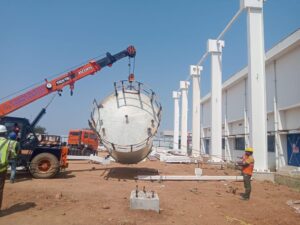
Mall structures may incorporate steel canopies, roof structures, trusses, platforms, service structures, and other steel components. These can be dismantled using suitable cutting, lifting, and material-handling techniques.
6. Escalator & Elevator Dismantling
Escalators, elevator components, support frames, and associated equipment require planned dismantling before or alongside structural demolition, depending on the project sequence.
7. Concrete Cutting & Breaking
Where controlled removal is required, specialized techniques such as concrete cutting, wall sawing, core cutting, and mechanical breaking can be considered according to site conditions.
8. Façade & Glass Dismantling
Malls frequently have large glass façades, cladding, signage, canopies, and architectural elements. These components can require controlled dismantling to reduce falling-object and fragmentation risks.
9. MEP & Equipment Dismantling
Mall demolition projects may involve the removal of:
- HVAC equipment
- Electrical installations
- Plumbing systems
- Fire-fighting systems
- Pumps
- DG-related equipment
- Mechanical equipment
- Utility lines
- Service equipment
10. Debris Removal & Site Clearance
Following demolition, concrete, steel, masonry, and other materials are systematically collected, segregated, loaded, transported, and cleared from the work area as required by the project.
Why Mall Demolition Requires Detailed Planning
A shopping mall is more than a conventional building. It may have large open floor plates, heavy equipment, multiple structural systems, underground services, basements, parking structures, interconnected utilities, and neighboring properties.
Before demolition begins, the structure and surrounding area should be assessed to identify potential collapse risks and site hazards. OSHA demolition guidance similarly emphasizes an engineering survey, assessment of adjacent structures, utility control, and planning before demolition operations begin.
Important considerations include:
- Structural configuration
- Existing building condition
- Adjacent buildings
- Roads and public access
- Underground utilities
- Electrical and water connections
- Gas and other services
- Basement structures
- Fire and emergency access
- Equipment access
- Dust and noise control
- Falling-object protection
- Demolition sequence
- Debris handling
- Scrap recovery
Safety in Mall Demolition
Safety is one of the most important aspects of a mall demolition project because of the structure’s size, complexity, and potential interaction with surrounding properties.
Important safety measures may include:
- Engineering and structural assessment
- Controlled access to the demolition zone
- Exclusion zones
- Appropriate PPE
- Fall protection
- Dust suppression
- Equipment inspection
- Safe machinery operation
- Utility isolation
- Fire prevention measures
- Emergency response planning
- Safe debris handling
- Protection of adjacent structures
- Continuous monitoring of changing site conditions
IS 4130:2024 defines an exclusion zone as an area surrounding a demolition site that may be affected by demolition activities and is typically restricted during critical demolition operations.
Mall Demolition Equipment
Depending on project requirements, suitable equipment may include:
- Excavators
- High-reach demolition excavators
- Hydraulic breakers
- Concrete crushers
- Pulverizers
- Hydraulic shears
- Material handlers
- Cranes
- Cutting equipment
- Diamond cutting equipment
- Core cutting equipment
- Water-spraying/dust suppression systems
- Loading and transportation equipment
The equipment selection depends on building height, structural system, accessibility, demolition sequence, and surrounding conditions.
Types of Mall Demolition Projects We Handle
Malik Trading and Demolition can undertake demolition and dismantling requirements for different commercial property configurations, including:
- Shopping mall demolition
- Commercial mall demolition
- Multi-storied mall demolition
- High-rise mall demolition
- Old mall demolition
- Vacant mall demolition
- Damaged mall demolition
- Partial mall demolition
- Mall redevelopment demolition
- Retail complex demolition
- Shopping complex demolition
- Commercial building dismantling
- Parking structure demolition
- Mall interior dismantling
- RCC mall demolition
- Steel structure dismantling
Why Choose Malik Trading and Demolition?
Choosing the right demolition contractor is essential for large commercial demolition projects. Malik Trading and Demolition focuses on systematic planning, controlled execution, appropriate equipment, safety management, and efficient site clearance.
Our Key Strengths
Experienced Demolition Team
Our experienced professionals understand the requirements of complex demolition and dismantling operations.
Controlled Demolition Approach
We plan the demolition sequence according to the structure and surrounding site conditions.
Advanced Equipment
Suitable demolition machinery and specialized equipment can be deployed according to project requirements.
Safety-Focused Execution
Safety planning covers workers, equipment, neighboring properties, utilities, and controlled access to the work zone.
Material Recovery
Where practical, recyclable and recoverable materials can be segregated during dismantling and demolition.
Complete Site Clearance
Our scope can extend from demolition and dismantling through debris handling and final site clearance.
Conclusion
Mall demolition is a specialized operation that requires planning, structural understanding, experienced professionals, appropriate equipment, and strict safety controls. From complete shopping mall demolition to selective dismantling, RCC demolition, steel dismantling, interior removal, equipment dismantling, debris management, and site clearance, every stage needs to be carefully coordinated.
At Malik Trading and Demolition, we provide professional demolition and dismantling solutions for large commercial structures with an emphasis on safety, precision, controlled execution, efficient material handling, and timely project completion.